From the world's largest navy to hypersonic missiles and nuclear expansion, China's military modernization is the most ambitious since the Cold War — and it is reshaping the balance of power at the heart of the Thucydides Trap.
In the span of a single generation, the People's Republic of China has transformed its military from a bloated, technologically backward land army into the most formidable fighting force in the Asia-Pacific — and, by several critical measures, the second most powerful military on earth. The speed and scale of this transformation have no modern precedent. No country since the United States in World War II has invested so aggressively in building military power across every domain simultaneously: naval, air, missile, nuclear, space, and cyber. Understanding the dimensions of this buildup is essential to grasping why the Thucydides Trap between the United States and China is not merely a theoretical construct but a lived strategic reality.
China's officially reported defense budget for 2025 stands at approximately $233 billion, representing the 30th consecutive year of increase and a 7.2% rise over the previous year. But virtually every serious defense analyst believes the real figure is substantially higher — perhaps $350 billion to $460 billion when accounting for off-budget items such as military-related research and development, paramilitary forces, arms imports, and subsidies to China's sprawling defense-industrial base. Even using official figures, China's defense spending now exceeds the combined military budgets of Japan, South Korea, India, Australia, and every ASEAN nation. The gap between Chinese defense spending and that of any plausible regional coalition of adversaries has been widening, not narrowing, for over a decade.
But raw spending figures, while important, understate the true significance of what China is building. Because labor costs, construction costs, and procurement costs in China are substantially lower than in the United States, Beijing gets considerably more military capability per dollar spent. The purchasing-power-parity-adjusted estimate of China's defense spending — the measure that accounts for what the money actually buys — has been estimated at over $700 billion by some analyses, approaching parity with the United States. When one further considers that China is building its military for a single theater (the Western Pacific) while the United States must distribute its forces globally, the effective balance of power in the most likely conflict zone is even more competitive than aggregate numbers suggest.
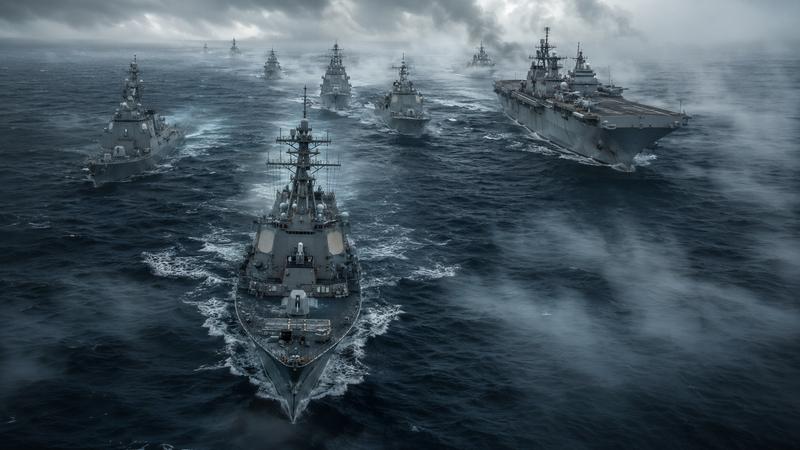
The numbers tell a story of relentless, systematic expansion. The People's Liberation Army Navy (PLAN) now operates more than 370 battle-force ships, making it the world's largest navy by hull count — surpassing the United States Navy, which has approximately 295. China is launching warships at a rate that staggers Western defense planners: between 2015 and 2025, the PLAN commissioned more tonnage than the entire Royal Navy possesses. The PLA Air Force and Naval Aviation combined operate over 3,150 aircraft, making them the largest air force in the Asia-Pacific and the third largest in the world. The PLA Rocket Force fields the world's most diverse and advanced arsenal of conventional ballistic and cruise missiles, capable of striking targets across the entire Western Pacific.
"China is not simply modernizing its military. It is building an entirely new military — one designed from the ground up to fight and win wars against technologically advanced adversaries. The scale of the effort is without parallel in the post-Cold War era."
What makes China's military expansion qualitatively different from previous modernizations is its comprehensiveness. This is not the story of a country upgrading one branch of service or investing in a single technological domain. China is simultaneously building a blue-water navy capable of global power projection, a stealth air force designed to contest air superiority against fifth-generation fighters, a missile force that can hold adversary bases and carrier groups at risk across thousands of miles, a space warfare capability intended to blind and degrade enemy command and control, a cyber warfare apparatus of extraordinary sophistication, and a nuclear arsenal undergoing its most dramatic expansion in history. Each of these programs, taken in isolation, would represent a major shift in the regional balance of power. Taken together, they constitute a military revolution.
The hardware is only part of the story. Since taking power in 2012, Xi Jinping has overseen the most sweeping reorganization of China's military since the founding of the People's Republic in 1949. These reforms have been as consequential as the procurement of new weapons systems, because they address the fundamental question of whether the PLA can actually employ its growing capabilities effectively in combat.
For decades, the PLA was structured as a ground-force-centric organization organized around seven military regions, a relic of the Maoist-era focus on fighting a land war of attrition against an invading enemy. The army dominated the PLA's bureaucracy, budget, and strategic culture. The navy, air force, and missile forces were treated as supporting arms rather than co-equal services. Joint operations — the coordinated employment of forces across multiple domains that defines modern warfare — were poorly practiced and institutionally resisted. The PLA of 2010, despite its growing equipment inventories, remained an organization that would have struggled to coordinate a complex, multi-domain military operation like a Taiwan contingency.
Xi's reforms attacked these problems with characteristic ambition and ruthlessness. In 2015-2016, he abolished the seven military regions and replaced them with five joint theater commands, each with authority over all service branches within its area of responsibility. This was not an incremental adjustment; it was the wholesale destruction of the existing command structure and its replacement with an organization modeled on the US combatant command system. The Eastern Theater Command, which faces Taiwan, was given explicit responsibility for planning and executing a cross-strait operation using integrated forces from all services.
Xi also elevated the PLA Navy, Air Force, and Rocket Force to co-equal status with the ground forces, ending decades of army dominance. He created a new Strategic Support Force (later reorganized into the Information Support Force, Aerospace Force, and Cyberspace Force in 2024) to centralize space, cyber, electronic warfare, and information operations under unified command. He established a Joint Logistics Support Force to address the chronic supply-chain weaknesses that would cripple any sustained military operation. And he reduced the size of the ground forces by 300,000 troops while simultaneously increasing investment in the navy, air force, and missile forces — a politically difficult move that signaled the seriousness of the shift from a continental to a maritime and aerospace-oriented military posture.
The human dimension of the reform was equally aggressive. Xi launched an unprecedented anti-corruption campaign within the PLA that resulted in the removal or prosecution of over 100 generals and admirals, including two former vice chairmen of the Central Military Commission. Whatever the political motives behind this purge, its military effect was to break the patronage networks that had calcified the PLA's leadership and replace them with officers selected, at least in part, on the basis of professional competence and loyalty to Xi's modernization agenda. The PLA's training regime has been intensified, with a greater emphasis on realistic combat exercises, joint operations, and night and all-weather operations. Military education institutions have been reformed to produce officers capable of managing the complexity of modern warfare.
"Xi Jinping has not merely given the PLA better weapons. He has rebuilt the entire institution — its command structure, its culture, its training, and its leadership — to function as a genuine joint fighting force capable of conducting the kind of complex, multi-domain operations that modern warfare demands."
The question that haunts Western defense planners is how effective these reforms have been in practice. The PLA has not fought a war since its brief and poorly executed border conflict with Vietnam in 1979. It has never conducted a large-scale amphibious operation, never coordinated joint fires across multiple domains under combat conditions, never sustained logistics over contested sea lanes. The gap between organizational reform and combat effectiveness is real, and some analysts argue that it may take another decade before the PLA's new structures are fully operational. But the direction of travel is unmistakable, and the pace of change has consistently exceeded Western expectations.
China's air forces — comprising both the PLA Air Force (PLAAF) and PLA Naval Aviation — have undergone a transformation comparable to the navy's. The PLAAF has transitioned from an obsolescent force reliant on 1960s-era designs to one operating fourth- and fifth-generation combat aircraft in significant numbers, supported by advanced airborne early warning and control systems, aerial refueling tankers, and electronic warfare platforms.
The centerpiece of China's air modernization is the Chengdu J-20, China's first fifth-generation stealth fighter. The J-20 entered service in 2017 and has been produced in steadily increasing numbers; credible estimates suggest that between 250 and 300 J-20s are now in service or on order, making China the only country besides the United States to operate a fifth-generation fighter in large numbers. The J-20 is a large, twin-engine aircraft optimized for long-range interception and strike missions — a design philosophy that reflects China's strategic priority of engaging adversary aircraft, tankers, and airborne early warning platforms at extended range before they can reach Chinese airspace or threaten Chinese naval forces. The aircraft's stealth characteristics, while likely not matching those of the US F-22 Raptor, are sufficient to complicate adversary air defense networks significantly. A more advanced variant, the J-20B with thrust-vectoring engines, is entering production, and a sixth-generation fighter program is underway.
Beyond the J-20, the PLAAF operates large numbers of capable fourth-generation fighters, including the J-16 (a strike fighter comparable to the F-15E Strike Eagle), the J-10C (a multirole fighter incorporating an active electronically scanned array radar and advanced electronic warfare systems), and the Su-35, purchased from Russia. The Shenyang J-35 — a twin-engine stealth fighter designed for carrier operations — is expected to begin deploying aboard the Fujian, giving China carrier-based stealth aviation for the first time.
China's strategic bomber force is undergoing its own generational shift. The current backbone is the H-6 — a heavily modernized derivative of the Soviet Tu-16 — which has been adapted into a remarkably capable cruise-missile carrier. The H-6K and H-6N variants can carry six to seven long-range cruise missiles, including the nuclear-capable CJ-20 with an estimated range of over 2,500 kilometers. But the real concern for Western planners is the H-20, China's first purpose-built stealth strategic bomber, which has been in development for over a decade and is expected to make its first flight in the near future. The H-20 is believed to be a flying-wing design with intercontinental range and a large internal weapons bay, giving China the ability to conduct stealthy, long-range strike missions that would be extremely difficult to detect and intercept.
Perhaps the most rapidly evolving dimension of Chinese air power is the development and deployment of unmanned aerial systems. China is the world's largest producer and exporter of military drones, and the PLA is integrating them into its force structure at every level. Beyond the now-familiar medium-altitude surveillance and strike drones like the Wing Loong and CH series, China is investing heavily in autonomous drone swarm technology — the ability to deploy large numbers of small, networked, AI-coordinated unmanned vehicles in saturation attacks that overwhelm adversary defenses. Chinese military exercises have demonstrated swarms of hundreds of drones operating in coordinated formations, and PLA theorists have written extensively about using drone swarms to target aircraft carriers, air bases, and command facilities. The combination of low cost, expendability, and the ability to saturate defenses makes drone swarms a potential game-changer in any Western Pacific conflict.
If the PLAN represents the most visible face of China's military buildup, the PLA Rocket Force (PLARF) may represent the most strategically consequential. China has invested more heavily in conventional ballistic and cruise missiles than any other nation, building an arsenal that is specifically designed to exploit the vulnerabilities of American power-projection capabilities in the Western Pacific. The result is a missile force that fundamentally changes the calculus of any military confrontation in the region.
The most discussed weapons in the PLARF's inventory are the so-called "carrier killer" missiles: the DF-21D and DF-26. The DF-21D is a medium-range ballistic missile (range approximately 1,500 km) equipped with a maneuverable warhead designed to strike moving ships at sea — a capability that no other nation possesses in an operational system. The DF-26 extends this capability to approximately 4,000 km, putting US bases on Guam and naval forces operating across the Western Pacific within range. These weapons exploit the fundamental asymmetry of the US-China military competition: aircraft carrier strike groups, which cost the US approximately $15 billion each, can potentially be targeted by missiles costing a fraction of that amount. Even if the actual probability of hitting a maneuvering carrier is debated, the mere existence of these weapons forces US Navy planners to operate at greater distances from the Chinese coast, reducing the effectiveness of carrier-based aviation in a Taiwan contingency.
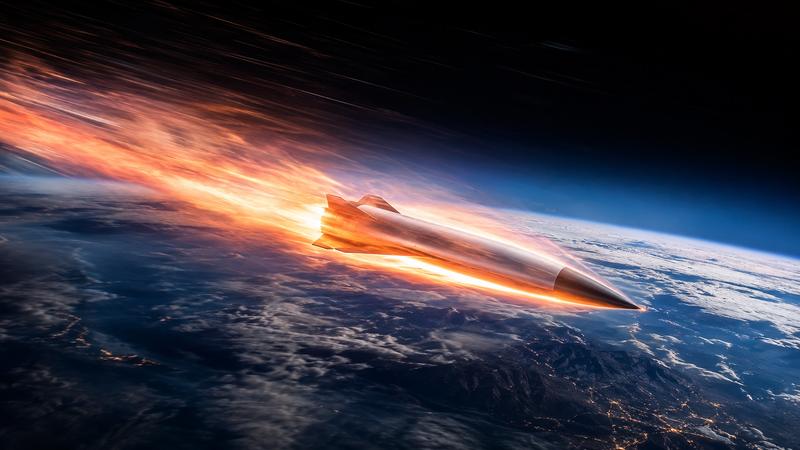
But it is in hypersonic weapons that China has achieved its most dramatic edge. The DF-17, which entered service around 2020, is a medium-range ballistic missile equipped with a hypersonic glide vehicle (HGV) capable of maneuvering at speeds exceeding Mach 5 while flying at altitudes and on trajectories that defeat current missile defense systems. The HGV can change course during its glide phase, making its trajectory unpredictable and interception extraordinarily difficult with existing technology. The DF-17 is designed to strike high-value targets such as air bases, command centers, and missile defense installations at ranges of 1,800 to 2,500 kilometers. The more advanced DF-27, reported to be in development or early deployment, is believed to extend this capability to ranges of 5,000 to 8,000 kilometers with even greater maneuvering capability, potentially placing targets as far as Diego Garcia and the US Pacific territories at risk.
China has also tested a fractional orbital bombardment system (FOBS) combined with a hypersonic glide vehicle, demonstrated in a widely reported July 2021 test that shocked US intelligence officials. This system launches a glide vehicle into a partial orbit, allowing it to approach its target from any direction — including over the South Pole, where US missile defense sensors have minimal coverage. General Mark Milley, then Chairman of the Joint Chiefs of Staff, described the test as "very close to a Sputnik moment." The strategic implication is that China is developing the capability to bypass American missile defenses entirely, undermining the strategic stability that has underpinned the US-China nuclear relationship.
The PLARF's conventional missile arsenal also includes a vast inventory of short-range ballistic missiles (over 1,200 aimed at Taiwan), medium-range ballistic missiles capable of striking US bases in Japan and South Korea, and ground-launched cruise missiles that can reach targets throughout the Western Pacific. This arsenal gives China the ability to conduct devastating conventional strikes against adversary bases, ports, airfields, and logistics hubs in the opening hours of a conflict — potentially degrading the US and allied force structure in the region before it can be brought to bear. The concept, which Chinese military planners call "system destruction warfare," aims to paralyze the adversary's ability to coordinate and respond rather than to defeat enemy forces in attrition.
"China's missile arsenal is designed to solve a specific problem: how to prevent the United States from projecting power into the Western Pacific. If it succeeds, the entire American alliance architecture in Asia — built on the assumption of US military supremacy — collapses."
For decades, China maintained a nuclear arsenal of roughly 200 to 350 warheads — a deliberately small force consistent with its declared policy of "minimum deterrence" and "no first use." While the United States and Russia maintained arsenals of thousands of warheads, China appeared content with a force just large enough to ensure that a nuclear strike against China would be met with a retaliatory response sufficient to deter any rational adversary. This restraint was one of the stabilizing features of the US-China strategic relationship.
That era is over. Beginning around 2020, commercial satellite imagery revealed the construction of at least three large intercontinental ballistic missile (ICBM) silo fields in central and western China, containing approximately 350 new silos. This construction, combined with the continued expansion of road-mobile ICBM forces and the deployment of new ballistic missile submarines, signals a fundamental shift in China's nuclear posture. The US Department of Defense estimated in its 2024 China Military Power Report that China possessed over 600 operational nuclear warheads, up from an estimated 350 just three years earlier, and projected that the arsenal would reach 1,000 warheads by 2030 and potentially 1,500 by 2035.
The implications of this expansion are profound. At 1,000 to 1,500 warheads, China would possess a nuclear arsenal roughly comparable in size to the deployed forces of the United States and Russia under the New START treaty framework. This does not mean China would achieve "parity" in every dimension of nuclear capability — the US maintains significant advantages in warhead sophistication, delivery system diversity, and early warning infrastructure — but it does mean that the comfortable assumption of overwhelming American nuclear superiority that has underpinned US strategic planning in Asia for decades is eroding rapidly.
The new delivery systems accompanying this warhead expansion are equally concerning. The DF-41, a road-mobile solid-fueled ICBM with an estimated range of 12,000 to 15,000 kilometers, can carry multiple independently targetable reentry vehicles (MIRVs), with each missile potentially delivering up to 10 warheads to separate targets. The JL-3 submarine-launched ballistic missile, to be carried aboard the new Type 096 SSBN, provides a secure second-strike capability from ocean bastions. And the hypersonic glide vehicles and FOBS systems discussed earlier add nuclear delivery options that are specifically designed to defeat missile defense systems.
Why is China undertaking this dramatic expansion? Beijing has not offered a clear public explanation, but analysts have identified several possible drivers. First, China may fear that advances in US missile defense, conventional precision strike, and intelligence capabilities could threaten the survivability of its small nuclear force, eroding its deterrent. A larger, more diverse arsenal is more survivable. Second, a larger nuclear force may be intended to bolster deterrence in a Taiwan contingency: if the US knows that China can absorb a first strike and still deliver a devastating nuclear response, Washington may be less willing to risk escalation. Third, the expansion may reflect a broader shift in Chinese strategic thinking, from accepting vulnerability as the price of minimum deterrence to seeking the kind of strategic stability that comes only with rough parity. Whatever the motivation, the result is a three-way nuclear competition between the US, Russia, and China that adds a dangerous new dimension to the Thucydides Trap dynamic.
"China's nuclear buildup is not merely adding warheads. It is dismantling the framework of strategic stability that has kept the nuclear peace in Asia for seventy years — and neither the United States nor China has articulated what should replace it."
Modern military power depends on two domains that are invisible to the naked eye but essential to everything from precision targeting to command and control: space and cyberspace. China's investments in both domains have been among the most aggressive and consequential elements of its military buildup, because they target the very foundations on which American military superiority rests.
The United States military's operational effectiveness depends critically on space-based assets: GPS satellites provide precision navigation and targeting, communications satellites enable global command and control, early warning satellites detect missile launches, and reconnaissance satellites provide the intelligence picture that guides operations. Degrade or destroy these assets, and the US military's ability to coordinate complex operations across vast distances — the core of its operational advantage — deteriorates dramatically. China has understood this dependency and has invested accordingly.
China conducted its first successful anti-satellite (ASAT) test in 2007, destroying one of its own defunct weather satellites with a kinetic-kill vehicle. Since then, China has developed a layered anti-space capability that includes ground-based ASAT missiles capable of reaching low Earth orbit, co-orbital inspection and potential kill vehicles that can maneuver to and disable enemy satellites, ground-based lasers capable of dazzling or damaging satellite optical systems, and electronic warfare systems designed to jam satellite communications and GPS signals. The PLA's new Aerospace Force, established in 2024, centralizes these capabilities under a single command authority.
China's own space-based infrastructure has expanded rapidly. The BeiDou satellite navigation system, completed in 2020, provides China with an indigenous alternative to GPS, ensuring that PLA operations would not be dependent on an American system that could be degraded or denied. China operates a growing constellation of reconnaissance, electronic intelligence, and ocean surveillance satellites that provide the targeting data needed for the PLARF's long-range missile strikes. And China's space station, the Tiangong, while officially civilian, provides a platform for research with clear dual-use military applications.
In cyberspace, China has built what is arguably the world's most extensive state-sponsored cyber warfare apparatus. The PLA's Strategic Support Force (and its successor organizations) is responsible for cyber operations that span the full spectrum from espionage to offensive attack. China-linked cyber actors have penetrated the networks of virtually every major US defense contractor, multiple government agencies, and critical infrastructure operators. The 2023 revelation of the "Volt Typhoon" campaign — in which Chinese hackers pre-positioned access to US critical infrastructure including water systems, power grids, and transportation networks — demonstrated that China is preparing the digital battlefield for a potential conflict, with the capability to disrupt American society and military mobilization in the opening stages of a war.
The integration of space and cyber capabilities into China's overall military strategy is designed to achieve what PLA theorists call "information dominance" — the ability to see the battlefield clearly while blinding the adversary. In the context of a Taiwan contingency, this would mean degrading US satellite communications and reconnaissance in the opening minutes of a conflict, disrupting the information networks that coordinate allied forces, and exploiting cyber access to slow or confuse the American military response. Combined with the missile strikes designed to destroy physical infrastructure, the space and cyber dimensions of China's strategy aim to create a window of confusion and paralysis during which the PLA could achieve its objectives before an effective response can be organized.
The most instructive historical parallel to China's military buildup is not to be found in the Cold War arms race between the United States and the Soviet Union, which was primarily nuclear and ideological. The closer parallel — and the more ominous one — is the Anglo-German naval rivalry of the late 19th and early 20th centuries, a case that Graham Allison identifies as one of the clearest examples of the Thucydides Trap producing war.
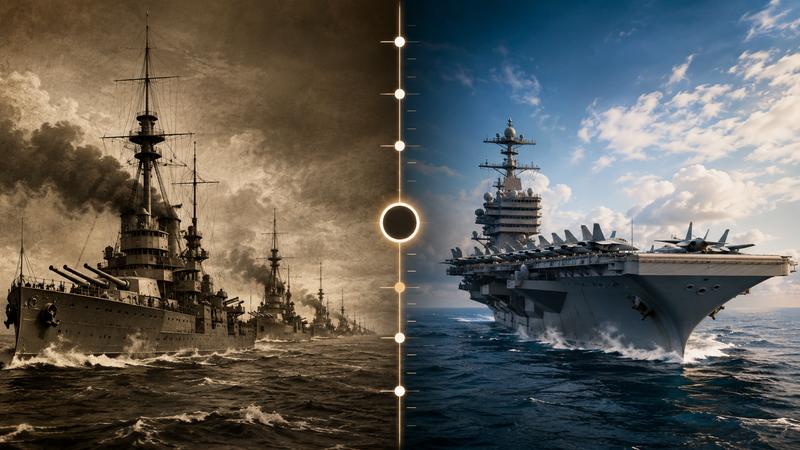
In the 1890s, Imperial Germany was the rising power of Europe: its economy had surpassed Britain's in steel production and was closing the gap in GDP; its industrial base was the most dynamic on the continent; and its leadership harbored ambitions for global influence commensurate with its growing strength. Germany's existing military was the most powerful land force in Europe, but its navy was insignificant compared to the Royal Navy, which had maintained global maritime supremacy for a century. Admiral Alfred von Tirpitz persuaded Kaiser Wilhelm II that a powerful navy was essential to Germany's status as a world power — and that a fleet large enough to threaten the Royal Navy would force Britain to treat Germany as an equal rather than a subordinate.
The result was the German Naval Laws of 1898 and 1900, which launched an ambitious program of battleship construction explicitly designed to challenge British naval supremacy. The program was not intended to defeat the Royal Navy in open battle; Tirpitz's "risk theory" held that a German fleet two-thirds the size of the British fleet would be sufficient to deter Britain from confrontation, because a British victory would come at such cost that the Royal Navy would be weakened relative to other naval powers. Germany did not need to be stronger than Britain; it needed to be strong enough to make a British attack prohibitively costly.
The parallels to China's current strategy are striking. China is not attempting to match the United States ship-for-ship across the global ocean. Instead, it is building a force that is strong enough to control the waters within the first and second island chains, and to make any American military intervention in those waters so costly that Washington would think twice before committing. The DF-21D and DF-26 "carrier killers" are the modern equivalent of Tirpitz's battleships: weapons designed not to defeat the adversary's navy outright but to raise the cost of engagement to an unacceptable level. The strategic logic — make the ruling power's military superiority irrelevant in the one theater that matters most — is identical.
Britain's response to the German naval challenge followed a pattern that is eerily familiar. Initial disbelief gave way to alarm, then to a massive counter-buildup (the Dreadnought revolution), then to a reorientation of alliance structures designed to contain Germany (the Entente Cordiale with France, the Anglo-Russian Convention). The naval arms race became both a symptom and a cause of the deteriorating relationship: each new ship launched by one side reinforced the other's perception that it was dealing with an irreconcilable adversary. The arms race did not make war inevitable, but it made war more likely by creating a climate of mutual suspicion, by generating bureaucratic and industrial constituencies with an interest in continued competition, and by narrowing the political space for compromise.
The outcome, of course, was World War I — a catastrophe that neither side wanted or expected in the form it took, but that the structural dynamics of the Thucydides Trap made terrifyingly possible. The lesson is not that arms races automatically produce war, but that they create conditions in which war becomes increasingly likely, and in which the mechanisms for prevention are progressively weakened.
"When Imperial Germany built a navy to challenge Britain's, both sides believed they were acting defensively. Both were right, and both were wrong. The same dynamic is playing out today between China and the United States — and the stakes are incomparably higher."
The United States has not been passive in the face of China's military buildup, but its response has been constrained by competing global commitments, industrial limitations, and the inherent challenges of reorienting a military designed for post-Cold War power projection toward great-power competition in the Pacific. The result is a complex and still-evolving set of initiatives that aim to maintain deterrence while managing the risk of provocation.
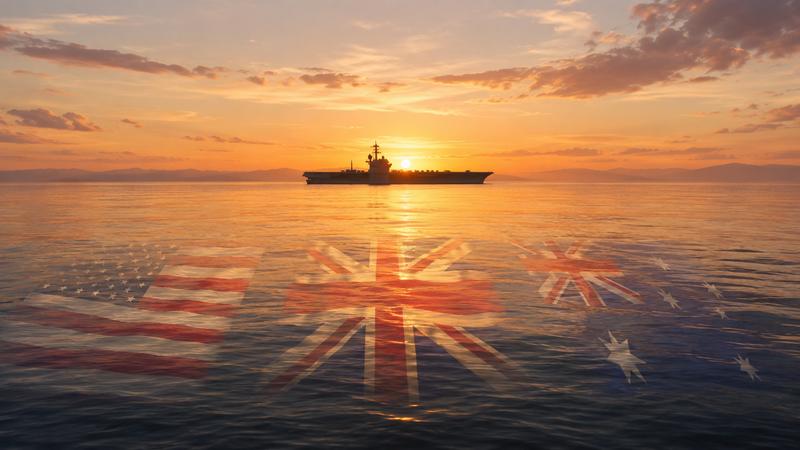
The most significant structural response has been the AUKUS trilateral security partnership, announced in September 2021, under which the United States and United Kingdom will assist Australia in acquiring nuclear-powered attack submarines. AUKUS represents an extraordinary commitment: the transfer of nuclear propulsion technology is something the US has done only once before, with Britain in 1958, and the decision to extend it to Australia signals the depth of concern about the shifting military balance in the Pacific. The agreement also encompasses cooperation on advanced capabilities including hypersonic weapons, electronic warfare, quantum computing, artificial intelligence, and undersea warfare technology. AUKUS is, in strategic terms, the Anglosphere's answer to China's military challenge — a deepening of the most trusted alliance relationships to maintain the technological edge that has been the foundation of Western military superiority.
The US military's own Pacific posture has undergone significant adjustments. The Marine Corps' Force Design 2030 initiative has restructured the service around small, dispersed, mobile units equipped with anti-ship missiles — "stand-in forces" designed to operate inside China's missile envelope and complicate PLA planning. The Army is deploying new mid-range missile capabilities to the Pacific, including the Typhon launcher system capable of firing SM-6 and Tomahawk missiles, giving ground forces an anti-ship and land-attack capability that they have not possessed since the end of the Cold War. The Air Force is implementing Agile Combat Employment, a concept designed to disperse aircraft across multiple smaller bases rather than concentrating them on a few large installations that are vulnerable to Chinese missile strikes.
US Indo-Pacific Command (INDOPACOM) has been the beneficiary of increased investment through the Pacific Deterrence Initiative, which has directed billions of dollars toward improving missile defense, strengthening logistics infrastructure, pre-positioning munitions, and building resilient communications networks across the theater. New base access agreements with the Philippines, expanded facilities in Guam, and increased rotational deployments to Australia and Japan are all designed to distribute US forces more widely and reduce their vulnerability to a Chinese first strike.
The alliance dimension of the US response extends beyond AUKUS. The US-Japan alliance has been significantly strengthened, with Japan undertaking its own historic military buildup — including the acquisition of long-range strike capabilities for the first time since World War II. The Quad partnership (US, Japan, India, Australia) has been elevated as a framework for Indo-Pacific coordination, while bilateral relationships with the Philippines, South Korea, and several Pacific Island nations have been deepened. The broader strategy is to create a networked security architecture that distributes the burden of deterrence across multiple partners, denying China the ability to isolate and coerce any single nation.
Yet significant challenges remain. The US defense-industrial base has struggled to produce munitions, ships, and submarines at the rate required to maintain the military balance. The Virginia-class submarine production line, critical to undersea warfare dominance, has fallen behind schedule. Key munitions stocks — including long-range anti-ship missiles and precision-guided bombs — may be insufficient for a sustained conflict. And the fundamental geographic asymmetry persists: China is building its military to fight close to home, while the US must project power across the world's largest ocean, sustaining logistics lines that stretch thousands of miles.
The central question raised by China's military buildup — and the US response to it — is whether this arms competition is making war more or less likely. The answer, drawn from both the Thucydides Trap framework and the broader historical record, is deeply unsettling: arms races do not automatically cause wars, but they create conditions that make wars significantly more probable, and they systematically degrade the mechanisms that could prevent them.
Graham Allison's research on the sixteen historical cases of rising-power-versus-ruling-power dynamics reveals that in twelve of the sixteen cases, the competition ended in war. In nearly every case that ended in war, an arms buildup by the rising power was a prominent feature of the pre-war period. Athens built the most powerful navy in the Greek world before its confrontation with Sparta. Germany's naval and military expansion preceded both world wars. Japan's military buildup in the 1930s set the stage for its collision with the United States and Britain. The pattern is consistent enough to constitute a structural warning: when a rising power builds a military capable of challenging the ruling power in the ruling power's area of dominance, the probability of war increases dramatically.
The mechanisms through which arms racing increases war risk are well understood and are all operating in the US-China context. First, arms racing creates security dilemma dynamics: each side's defensive preparations appear threatening to the other, provoking countermeasures that further increase the perceived threat. China builds anti-ship missiles to defend its coast; the US sees a force designed to deny it access to the Pacific. The US strengthens its alliance network; China sees encirclement. Each action, rational from the perspective of the actor, increases the other side's insecurity and motivation to prepare for conflict.
Second, arms racing creates use-it-or-lose-it pressures that can incentivize preemptive action. As both sides invest in capabilities designed to strike first and strike hard — China's missile force aimed at US bases, the US's developing capacity for long-range precision strike against Chinese launch sites — the premium on going first in a crisis increases. The side that strikes first may be able to degrade the other's capabilities significantly; the side that waits risks absorbing a devastating first blow. This dynamic, which characterized the pre-World War I European military competition, does not require either side to want war. It requires only a crisis in which both sides fear that the other might strike first — and that fear is becoming increasingly rational.
Third, arms racing narrows the political space for compromise. Military buildups generate bureaucratic constituencies — defense industries, military services, strategic think tanks — that have institutional interests in continued competition. They generate nationalist sentiments that make concessions politically costly. And they create a psychology of confrontation in which the adversary is increasingly viewed not as a competitor to be managed but as an enemy to be deterred or defeated. The political leaders who might seek compromise find that the domestic political terrain has shifted beneath them, making accommodation appear as weakness.
Fourth, and perhaps most dangerously, arms racing compresses decision timelines. As weapons become faster (hypersonic missiles that reach their targets in minutes), as command-and-control systems become more automated, and as the consequences of delay increase, the time available for deliberation in a crisis shrinks. The Cuban Missile Crisis unfolded over thirteen days, giving Kennedy and Khrushchev time to step back from the brink. A future crisis in the Taiwan Strait, in which hypersonic missiles and anti-satellite weapons could alter the military balance in hours, may not afford that luxury.
None of this means that war between the United States and China is inevitable. The Thucydides Trap is a structural condition, not a prophecy. The four cases in Allison's research that ended peacefully demonstrate that human agency can overcome structural pressures. But those cases required exceptional leadership, mutual recognition of the catastrophic costs of war, and deliberate institutional mechanisms for managing competition. The current trajectory of the US-China military competition is moving in the opposite direction: toward more weapons, faster decision cycles, fewer communication channels, and a political environment on both sides that rewards confrontation over accommodation.
The lesson of China's military buildup is ultimately not about ship counts, missile ranges, or warhead numbers — though all of these matter enormously. It is about what happens when a rising power acquires the military capability to challenge the ruling power in the ruling power's zone of primacy. History's verdict is clear: this is the single most dangerous configuration in international politics. That twelve of sixteen such cases ended in war does not mean that the seventeenth must. But it means that avoiding war will require a level of strategic wisdom, diplomatic creativity, and political courage that has so far been conspicuously absent on both sides of the Pacific.
"The Thucydides Trap does not predict that arms races cause wars. It predicts something more subtle and more dangerous: that arms races create the conditions under which the ordinary frictions of international politics — a border incident, a miscalculation, a domestic political crisis — become triggers for catastrophe."