
Destined for War: Can America and China Escape Thucydides's Trap?
The foundational text. Allison surveys 500 years of power transitions and lays out the case for — and against — U.S.-China war.
"It was the rise of Athens, and the fear that this instilled in Sparta,
that made war inevitable." — Thucydides, History of the Peloponnesian War, c. 431 BCE
The dangerous dynamic that occurs when a rapidly rising power threatens to displace a ruling power — creating structural stress that makes war far more likely, sometimes seeming inevitable, regardless of either party's intentions.
The Thucydides Trap is one of the most consequential concepts in contemporary international relations. It was coined by Graham Allison, a political scientist at Harvard University's John F. Kennedy School of Government and former U.S. Assistant Secretary of Defense. Allison introduced the term in a 2012 article in the Financial Times and developed it fully in his landmark 2017 book, Destined for War: Can America and China Escape Thucydides's Trap?
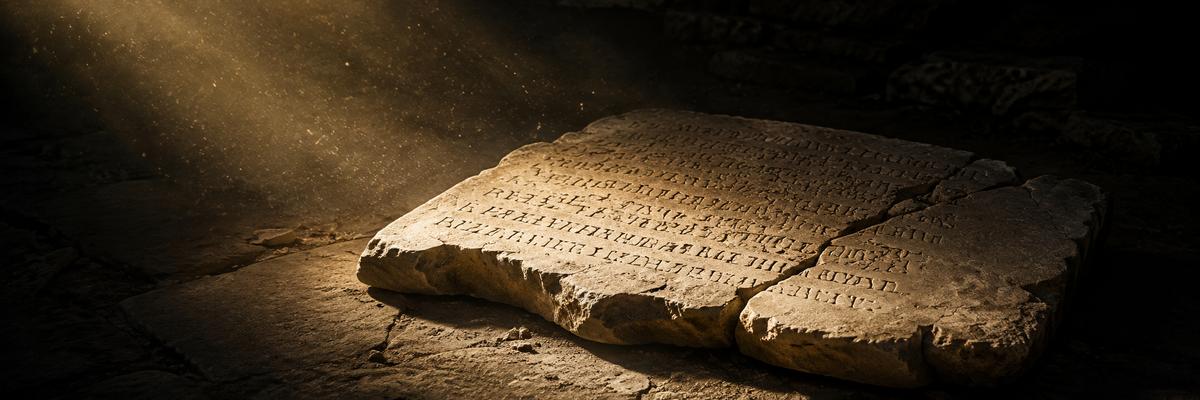
The concept is named after Thucydides (c. 460–400 BCE) — the ancient Athenian historian who chronicled the Peloponnesian War, a catastrophic 27-year conflict between Athens and Sparta. Thucydides observed that it was not any single incident or territorial dispute that caused the war, but the deep-rooted tension created by Athens's explosive rise threatening Sparta's established dominance.
In 12 of the 16 major power transitions Allison studied over 500 years of history — 75% — the result was war. The pattern held across continents, centuries, and cultures.
The trap operates through a combination of fear, honor, and interest — the three motivational forces Thucydides himself identified. When a rising power grows rapidly, the ruling power faces a fundamental dilemma: accommodate the challenger and risk losing primacy, or resist it and risk a pre-emptive confrontation. The rising power, meanwhile, grows increasingly confident and begins demanding recognition, territory, and influence the incumbent refuses to yield.
The result is an escalating spiral of suspicion, arms buildup, and crisis — pulling both sides toward war even when neither side's leaders consciously choose it. The "trap" is that rational actors, responding logically to incentives on both sides, can produce an irrational outcome for everyone.
The Thucydides Trap is closely related to power transition theory, developed by political scientist A.F.K. Organski in the 1950s, which holds that wars are most likely when a challenger's power approaches parity with the dominant state. Allison's contribution was to ground this theory in 16 concrete historical cases, giving it empirical weight and contemporary urgency — particularly regarding U.S.-China relations.
In the 5th century BCE, Athens was the world's most dynamic rising power. Flush with silver from the Laurion mines and tribute from the Delian League, it was expanding its navy, building the Parthenon, and exporting democracy across the Aegean. Its economic growth was extraordinary by ancient standards.
Sparta, by contrast, was the established hegemon — the pre-eminent military power of the Greek world for generations. As Athens grew stronger, Spartan anxiety deepened. Corinth and other Spartan allies pressed for action, warning that Spartan inaction would leave them encircled by Athenian power.
The Peloponnesian War that followed (431–404 BCE) lasted 27 years and devastated the entire Greek world. Athens's democracy was eventually overthrown; Sparta, though victorious, emerged so weakened that it fell to Thebes within a generation — allowing Macedonia to rise in their place. Neither side won what it fought for. It was a war rooted not in villainy but in systemic logic.
Thucydides recorded this tragedy with unprecedented analytical clarity. His insight — that structural power dynamics, not individual malice, drive great-power conflict — remains the most enduring observation in all of political science, read by military academies and diplomatic schools to this day.


Graham Allison spent decades studying how great powers manage — or mismanage — transitions. As a Harvard professor and former Pentagon official, he brought both academic rigor and real-world policy experience to the central question of international relations: what happens when a new power rises to challenge an old one?
Through Harvard's Belfer Center for Science and International Affairs, Allison and his research team systematically catalogued every major power transition over the past 500 years. They identified 16 cases where a rapidly rising power threatened a reigning one — and found that 12 ended in war.
His 2017 book Destined for War became an international bestseller, translated into dozens of languages and read by heads of state worldwide. It sparked a generation of policy debate about whether the United States and China are on a collision course determined not by choice, but by the iron logic of power transition.
Allison's work drew immediate engagement from the highest levels: Chinese President Xi Jinping publicly referenced the Thucydides Trap in 2015, stating China had no desire to fall into it — an acknowledgment that the concept had entered the vocabulary of world leaders.

Allison's team at Harvard studied every major instance over 500 years where a rising power seriously threatened the position of a ruling one. Of 16 cases, 12 resulted in war — a rate of 75%. Only 4 were resolved without large-scale conflict, and in each case, exceptional circumstances played a decisive role.
Click any event to expand details

No bilateral relationship more clearly embodies the Thucydides Trap today than U.S.-China relations. In 1980, China's economy was roughly 10% the size of America's. By 2014, it had surpassed the United States in purchasing power parity. China is now broadly projected to rival or exceed U.S. nominal GDP within the coming decade — representing the fastest major-power economic rise in human history.
This surge is occurring in a world where the United States has built its entire foreign policy, military posture, and global alliance architecture around maintaining American primacy. The underlying conditions for a Thucydidean confrontation are present across virtually every dimension of global competition.
"The systemic stress created by China's rise and its impact on the U.S.-led international order is as great as any great-power rivalry in history."
Critical differences from historical cases do exist. Both the U.S. and China possess thermonuclear arsenals, raising the cost of war to an existential level and creating a deterrence that has no historical precedent. Their economies are deeply — if increasingly frictionally — intertwined: China holds hundreds of billions in U.S. Treasury bonds; American consumers depend on Chinese manufacturing; Chinese growth depends on access to U.S. markets and technology.
This interdependence does not make war impossible — Europe's great powers were similarly linked before 1914 — but it substantially alters the decision calculus. The open question is whether 21st-century statesmen can do what their counterparts in 1914 could not: step back from the structural logic of the trap before it snaps shut.

The most important lesson from Allison's research is not that war is inevitable — it is that war is historically probable but not preordained. In 4 of the 16 cases, the transition was managed without large-scale conflict. Allison identifies the conditions that made peace possible — each a prescription for present-day diplomacy.
The most instructive successful case is the late 19th-century transition from British to American hegemony. The United States, growing rapidly, posed a direct challenge to British naval supremacy and hemispheric influence. Britain made a strategic choice: rather than fight American expansion, it accommodated it — stepping back from the Western Hemisphere, accepting American primacy in the Caribbean, and deliberately cultivating a shared cultural and institutional framework.
The result was not war but the "Special Relationship" — a partnership that proved decisive in both World Wars and endured through the 20th century. Britain traded short-term primacy for long-term alliance and security. It is the clearest template in history for how a ruling power can navigate displacement without catastrophe.
Whether the United States and China can engineer a comparable accommodation — across their profound ideological differences, their contested geography, and the sheer velocity of China's rise — remains the central question of 21st-century international relations.
When a new power rises fast enough to threaten the #1 power, history shows they almost always end up at war — even when neither side wants it. The "trap" is that structural forces of fear, competition, and prestige pull them toward conflict regardless of intentions. Named after Thucydides, the Greek historian who first described this dynamic 2,500 years ago.
Harvard political scientist Graham Allison, former U.S. Assistant Secretary of Defense, coined the term in a 2012 Financial Times article. He developed the concept fully in his 2017 book Destined for War: Can America and China Escape Thucydides's Trap? — an international bestseller that brought the theory into mainstream policy discourse.
Allison's research at Harvard's Belfer Center found that 12 of 16 historical cases — 75% — where a rising power challenged a ruling one resulted in war. The 4 peaceful transitions include the British accommodation of American hegemony and the Cold War (where nuclear deterrence prevented direct conflict between the U.S. and Soviet Union).
Most geopolitical scholars agree the structural conditions are present. China has achieved the fastest major economic rise in recorded history, directly challenging American primacy across economics, technology, and military capability. Whether it leads to war depends on leadership choices — nuclear deterrence, economic interdependence, and active diplomacy all play moderating roles, but none eliminates the structural pressure.
The Thucydides Trap is a powerful analytical framework with strong empirical grounding, but it has critics. Some scholars argue Allison's case selection is too broad or that he is overfitting a pattern. Others note that nuclear weapons have fundamentally altered great-power conflict in ways historical cases cannot capture. It is best understood as a probabilistic warning — a structural risk factor, not a deterministic law.
Thucydides identified three fundamental drivers: Fear — the ruling power fears displacement and loss of status; Honor — the rising power demands recognition commensurate with its new capabilities; and Interest — both sides hold incompatible claims over territory, resources, or spheres of influence. These forces operate structurally, independent of the intentions of individual leaders.
Four cases avoided large-scale war: (1) the Portugal–Spain rivalry of the 15th–16th century, resolved through the Treaty of Tordesillas dividing the world between them; (2) the Habsburg–Ottoman competition, managed through strategic accommodation; (3) the Britain–United States transition, where Britain strategically yielded primacy; and (4) the U.S.–Soviet Cold War rivalry, contained by nuclear deterrence and ultimately resolved by Soviet decline.
WWI is Allison's central cautionary example. Germany's rapid industrialization challenged British naval and economic supremacy — a textbook Thucydidean dynamic. Despite deep trade ties and shared culture, the structural pressure produced an arms race, a rigid alliance system, and ultimately a catastrophic war triggered by a seemingly minor event (the assassination of Archduke Franz Ferdinand). The lesson: structural forces can override rational interests when tensions peak.
The defining challenge of this century is whether China and America can construct a new relationship that avoids the Thucydides Trap — that deadly dynamic in which a rising power's threat to displace a ruling one triggers war that neither side wants.
We all need to work together to avoid the Thucydides Trap. Strong countries would vie for hegemony, leading to war. We must increase trust, reduce misunderstanding, and prevent strategic misjudgments.
It was the rise of Athens and the fear that this instilled in Sparta that made war inevitable. The truest cause is the one officially least acknowledged: the growth of Athenian power and the alarm this sounded in Sparta.
If we are to avoid catastrophe, both the United States and China must do things that are very difficult domestically — and both must be willing to recognize that the other side faces equivalent difficulties.
The greatest catastrophes in history have often been the product not of malice, but of miscalculation — of leaders who convinced themselves they could control forces that were, in fact, beyond their control.
History shows us that great-power conflict is not inevitable — but avoiding it requires an active, sustained commitment to building the institutions, habits, and trust that structural forces work constantly to erode.
The foundational text. Allison surveys 500 years of power transitions and lays out the case for — and against — U.S.-China war.
The original source. Thucydides' account remains the most searching analysis of why rational actors make catastrophic decisions.
The offensive realist argument that great powers are structurally driven to compete for hegemony — essential theoretical context.
A deep account of Chinese strategic culture and how centuries of history shape Beijing's approach to great-power competition.
The definitive account of how Europe's great powers stumbled into WWI — Allison's central cautionary tale about structural escalation.
Nye's optimistic counterpoint — arguing that soft power, economic interdependence, and institutions can moderate great-power rivalry.