Advertisement · 728×90

Understanding the Historical Record

Between the late 15th century and the present day, the international system has witnessed 16 major power transitions — moments when a rapidly rising state challenged the strategic primacy of an established power. These are not obscure border conflicts or minor colonial skirmishes. Each case involved great powers whose rivalry reshaped the geopolitical order of its era.

Graham Allison and his team at Harvard's Belfer Center for Science and International Affairs systematically catalogued these transitions, analyzing the structural dynamics, leadership decisions, and contingent events that determined whether each rivalry ended in peace or catastrophic war. The conclusions are sobering: 12 of the 16 cases produced war. Only four transitions were managed without large-scale armed conflict, and each required exceptional circumstances.

What follows is a detailed examination of every case — the forces that drove each rivalry, the key events that shaped its trajectory, and the lessons each holds for policymakers navigating great-power competition today.

Historical war rate in power transitions
75% — War (12 of 16) 25% — No War (4 of 16)
12
Ended in War
4
Avoided War
500
Years Studied
75%
War Rate
01

Portugal vs. Spain

Period: Late 15th – early 16th century
Rising Power: Portugal  |  Ruling Power: Spain
Peace

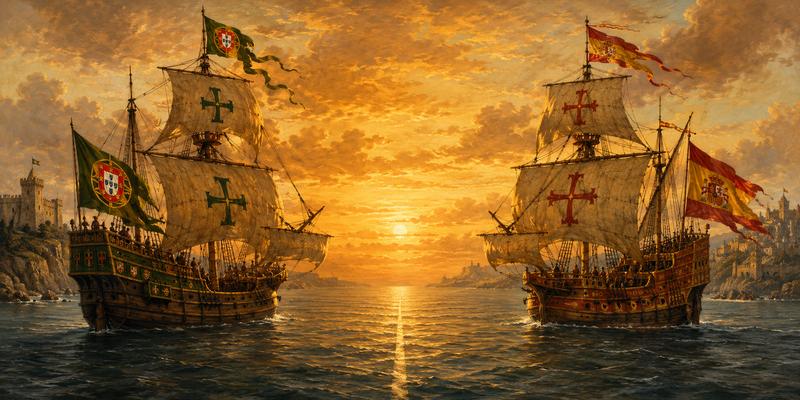
In the Age of Exploration, Portugal was the first European power to develop a global maritime empire, pioneering sea routes to Africa, India, and Brazil under Prince Henry the Navigator and his successors. By the late 15th century, however, the newly unified Spanish kingdom under Ferdinand and Isabella was rapidly expanding its own ambitions — Columbus's 1492 voyage to the Americas immediately created a direct collision course with Portuguese claims.

The rivalry was existential: both Iberian powers staked their entire economic futures on overseas trade and colonization. The potential for war was real and imminent. What averted it was a remarkable act of diplomatic creativity: the Treaty of Tordesillas (1494), brokered by Pope Alexander VI, which drew an imaginary line through the Atlantic and divided the non-Christian world between the two powers. Portugal received everything east of the line (including Brazil, Africa, and Asia); Spain received everything west (including most of the Americas).

This case demonstrates that even intense structural rivalry can be resolved peacefully when both sides find a formula that satisfies their core interests without requiring either to accept subordination. The treaty held for over a century and allowed both empires to expand without directly clashing. It remains one of history's most successful examples of preventive diplomacy — a negotiated partition of opportunity that defused the trap before it could spring shut.

02

France vs. the Habsburgs

Period: 16th century
Rising Power: France  |  Ruling Power: Habsburgs
War

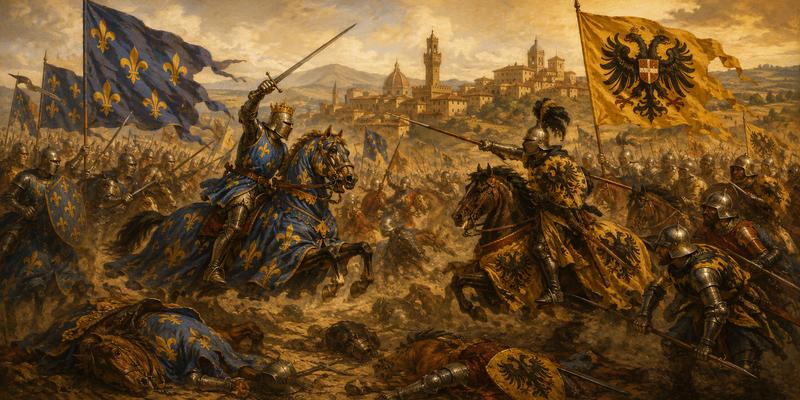
The 16th century pitted a resurgent France, unified under the Valois dynasty and buoyed by a growing population and centralized monarchy, against the vast Habsburg Empire of Charles V, which encompassed Spain, the Holy Roman Empire, the Netherlands, and much of Italy. France found itself geographically encircled by Habsburg territory — a strategic nightmare that made confrontation almost unavoidable.

The flashpoint was Italy. Both powers coveted the wealthy Italian peninsula, and the Italian Wars (1494–1559) became one of Europe's most prolonged and destructive conflicts. French kings — Charles VIII, Louis XII, and Francis I — launched repeated invasions, while the Habsburgs mobilized their enormous resources to repel them. The wars drew in virtually every European power, including the Papacy, Venice, England, and the Ottoman Empire as a French ally.

The conflict lasted over six decades and ended with the Peace of Cateau-Cambrésis (1559), which confirmed Habsburg dominance in Italy and effectively ended France's ambitions there. The case illustrates how geographic encirclement amplifies the structural pressures of the Thucydides Trap. When a rising power perceives itself as surrounded by a dominant rival's possessions, the impulse toward pre-emptive action becomes overwhelming — and the resulting conflict can persist for generations before exhaustion forces a settlement.

03

Habsburgs vs. the Ottoman Empire

Period: 16th – 17th century
Rising Power: Habsburgs  |  Ruling Power: Ottoman Empire
Peace

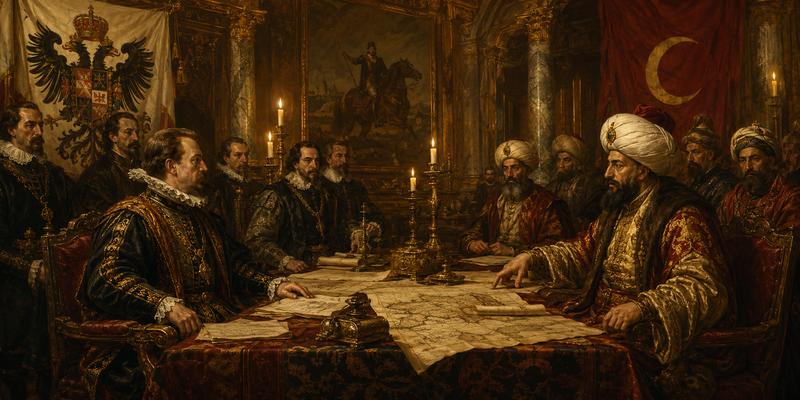
The Ottoman Empire under Suleiman the Magnificent was the dominant military power in southeastern Europe, the eastern Mediterranean, and the Middle East. The Habsburg Empire, expanding under Charles V and his successors, represented the primary Christian rival to Ottoman hegemony. The two empires collided repeatedly — at the Siege of Vienna (1529), at sea in the Mediterranean, and across the Balkans.

Despite these clashes, the rivalry never escalated into the kind of existential, all-consuming war that characterizes most Thucydides Trap outcomes. Several factors contained the conflict. First, geographic and logistic constraints made sustained warfare enormously costly for both sides — Ottoman supply lines stretched thin reaching Vienna, while the Habsburgs were simultaneously fighting France and internal Protestant revolts. Second, both empires practiced strategic accommodation: buffer states and client kingdoms absorbed much of the friction, and periods of truce and diplomatic engagement punctuated the rivalry.

Third, the empires operated in fundamentally different civilizational and economic spheres, reducing the zero-sum character of their competition. The Habsburg-Ottoman case demonstrates that when the costs of total war are prohibitive and both sides maintain alternative strategic priorities, great powers can coexist in a state of managed rivalry without crossing the threshold into full-scale conflict. The rivalry persisted for centuries but never produced the decisive, catastrophic war the structural conditions seemed to demand.

04

Habsburgs vs. France

Period: 17th century
Rising Power: Habsburgs  |  Ruling Power: France
War

By the early 17th century, the Habsburg dynasty still controlled an immense empire spanning Austria, Spain, and much of Central Europe. France under Louis XIII and his chief minister Cardinal Richelieu perceived this Habsburg encirclement as an existential threat. The structural dynamic was reversed from the previous century: now France was the established continental power fighting to prevent Habsburg consolidation of European hegemony.

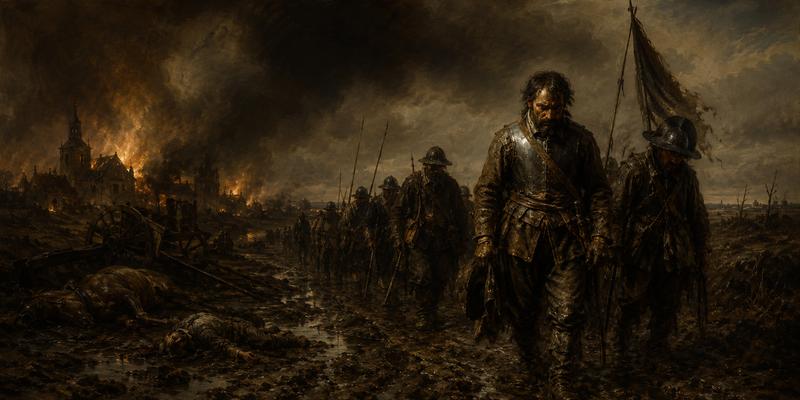
The Thirty Years' War (1618–1648) began as a religious conflict within the Holy Roman Empire but quickly became a full-scale great-power war. France intervened directly in 1635, transforming what had been a Central European conflict into a continental conflagration. Swedish, Danish, Dutch, and numerous German states were drawn in. The war was catastrophically destructive: entire regions of Central Europe lost a third or more of their population. Some areas of Germany did not recover demographically for a century.

The Peace of Westphalia (1648) that ended the war is widely considered the foundation of the modern state system, establishing the principles of sovereignty and non-interference. France emerged as the dominant European power, while Habsburg hegemonic ambitions were permanently curtailed. The Thirty Years' War stands as one of history's most devastating examples of the Thucydides Trap — a case where structural rivalry, compounded by ideological division and alliance entanglement, produced a conflict far more destructive than any participant intended or foresaw.

05

The Netherlands vs. England

Period: 17th century
Rising Power: Netherlands  |  Ruling Power: England
War

The Dutch Republic's Golden Age in the 17th century made it the world's premier commercial and maritime power. Dutch merchants dominated global trade, the Dutch East India Company controlled the spice routes, and Amsterdam became the financial capital of Europe. England, a growing maritime power in its own right, viewed Dutch commercial supremacy as a direct threat to its economic interests and naval ambitions.

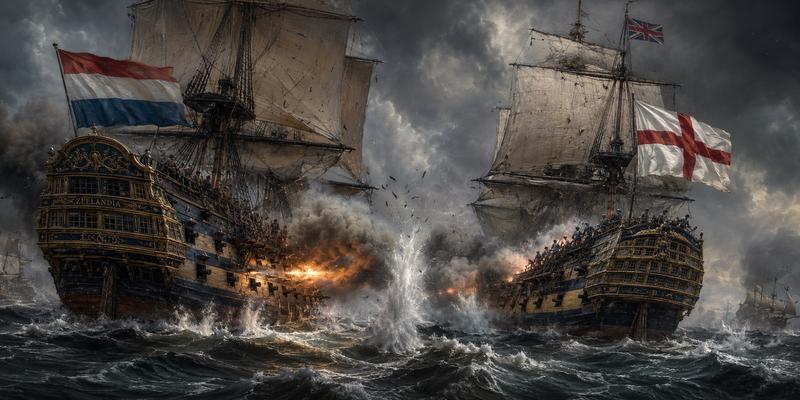
The result was three Anglo-Dutch Wars (1652–1654, 1665–1667, 1672–1674), fought almost entirely at sea. These were wars of commercial supremacy in their purest form — not over territory or ideology, but over control of trade routes, fishing rights, and colonial markets. England's Navigation Acts, designed to exclude Dutch ships from English colonial trade, were a deliberate provocation. Naval engagements in the North Sea, the English Channel, and as far as the East Indies marked a new kind of great-power conflict: competition for global economic dominance.

England ultimately prevailed, establishing the maritime supremacy that would define British power for centuries. The Dutch Republic, though never conquered, was permanently diminished as a global commercial hegemon. The Anglo-Dutch Wars demonstrate that the Thucydides Trap operates not only through traditional military rivalry but through economic competition. When a rising power's commercial success directly threatens the economic foundations of an established power, the structural logic of confrontation can be just as powerful as any territorial dispute.

06

France vs. Britain

Period: 18th century
Rising Power: France  |  Ruling Power: Britain
War

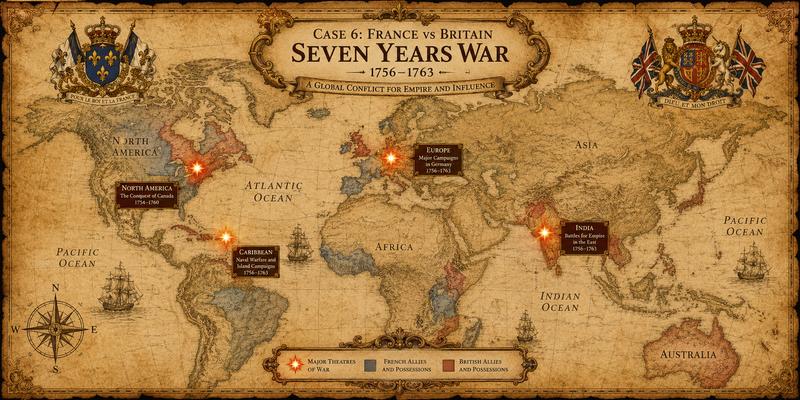
By the mid-18th century, France under Louis XV was the most populous and culturally dominant nation in Europe, with a rapidly expanding colonial empire in North America, the Caribbean, India, and West Africa. Britain, though smaller in population, possessed a superior navy and a growing industrial base. The two powers competed for global supremacy across multiple continents simultaneously — a rivalry that would define the century.

The Seven Years' War (1756–1763) was the decisive confrontation. Often called the first true "world war," it was fought on five continents: in Europe, North America (where it is known as the French and Indian War), the Caribbean, West Africa, India, and the Philippines. Britain's naval superiority proved decisive, allowing it to project power globally while strangling French supply lines. The war ended with the Treaty of Paris (1763), which stripped France of Canada, most of its Indian possessions, and numerous Caribbean islands.

The Seven Years' War established Britain as the world's preeminent colonial and naval power — a position it would hold for 150 years. For France, the humiliation fueled resentment that contributed directly to its support for the American Revolution and, eventually, the internal upheaval of the French Revolution. This case demonstrates the global dimension of the Thucydides Trap: when rising and ruling powers compete for worldwide influence, the resulting conflict can span continents and reshape the entire international order.

07

France (Napoleon) vs. Britain

Period: 1793 – 1815
Rising Power: France (Napoleon)  |  Ruling Power: Britain
War

The French Revolution and the rise of Napoleon Bonaparte created the most dramatic power surge in modern European history. Revolutionary and Napoleonic France combined ideological fervor with military genius, conquering or subordinating virtually every continental European state. Napoleon's Grande Armée was the most formidable fighting force the world had seen since the Roman legions. Britain, as the established maritime and financial hegemon, became the primary organizer of resistance.

The Napoleonic Wars (1803–1815) pitted French continental dominance against British naval and economic supremacy. Napoleon's Continental System attempted to destroy Britain through economic warfare by closing European ports to British trade. Britain responded with a global naval blockade and financed successive coalitions of European powers against France. The conflict reached its climax at Trafalgar (1805), which secured British naval supremacy, and culminated at Waterloo (1815), which ended Napoleon's ambitions permanently.

The Napoleonic Wars reshaped the map of Europe and established the Concert of Europe, a balance-of-power system that maintained relative peace for a century. The case illustrates a distinctive variant of the Thucydides Trap: when a rising power's surge is driven by a revolutionary ideology and a singular military genius, the structural dynamics are supercharged. The ruling power faces not merely a strategic rival but an existential ideological challenge — making compromise far more difficult and total war far more likely.

Advertisement · 300×250
08

Russia vs. Britain and France

Period: 1850s
Rising Power: Russia  |  Ruling Power: Britain and France
War

By the mid-19th century, the Russian Empire under Tsar Nicholas I was expanding aggressively southward and westward, seeking control of the Black Sea straits and influence over the declining Ottoman Empire. Britain and France, the established arbiters of the European balance of power, viewed Russian expansionism as a fundamental threat — to the Ottoman Empire's territorial integrity, to Mediterranean trade routes, and to the broader European equilibrium.

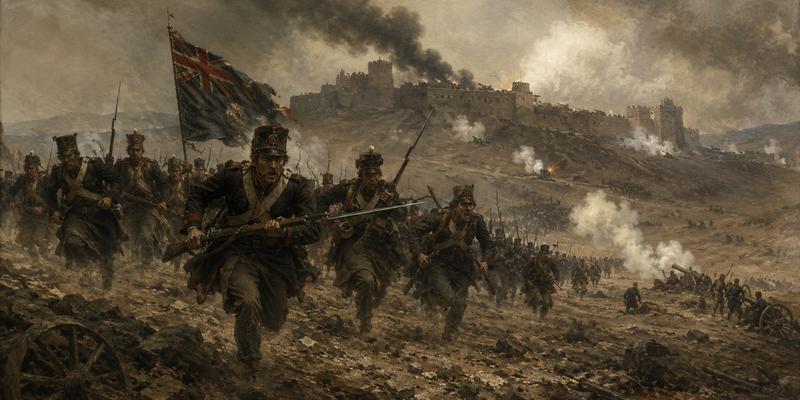
The Crimean War (1853–1856) erupted when Russia occupied Ottoman-controlled Danubian Principalities. Britain and France intervened militarily, landing forces in Crimea and besieging the Russian naval base at Sevastopol. The war was marked by logistical failures, tactical blunders, and enormous casualties on all sides — famously including the Charge of the Light Brigade. It was also the first major conflict to be documented by war correspondents and photographers, bringing its horrors to public attention.

Russia's defeat in Crimea halted its southward expansion for a generation and exposed the weaknesses of its feudal military system, spurring the Great Reforms of Alexander II, including the emancipation of the serfs. The Crimean War demonstrates that the Thucydides Trap can operate in a multipolar context: when a rising power threatens the interests of multiple established powers simultaneously, the likelihood of a coalition forming to check it increases dramatically. The structural dynamics of fear and containment operate regardless of the specific political context.

09

Germany vs. France

Period: 1860s – 1870s
Rising Power: Germany (Prussia)  |  Ruling Power: France
War

The rise of Prussia under Otto von Bismarck represents one of the most rapid and dramatic power surges in European history. Through a combination of diplomatic cunning, industrial growth, and military reform, Bismarck transformed a collection of fragmented German states into a unified great power. France under Napoleon III, long the dominant continental European power, watched this unification with mounting alarm — correctly perceiving that a united Germany would permanently alter the European balance of power.

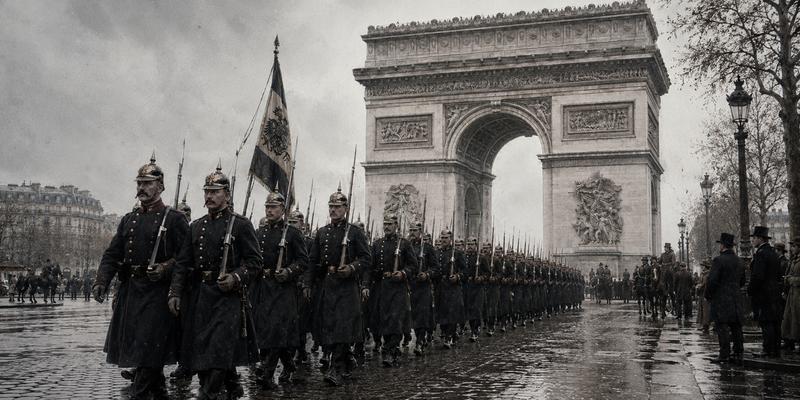
Bismarck deliberately engineered the Franco-Prussian War (1870–1871), manipulating the Ems Dispatch to provoke France into declaring war. The conflict was swift and decisive. Prussian military efficiency, superior mobilization via railroads, and the deadly Krupp steel artillery overwhelmed French forces. Napoleon III was captured at Sedan; Paris was besieged and starved into submission. The war ended with the proclamation of the German Empire in the Hall of Mirrors at Versailles — a deliberate humiliation that would poison Franco-German relations for generations.

The Treaty of Frankfurt (1871) stripped France of Alsace-Lorraine and imposed a massive indemnity. The Franco-Prussian War is a textbook example of the Thucydides Trap in its most ruthless form: a rising power using war as a deliberate instrument of unification and hegemonic displacement. Bismarck understood the structural dynamics perfectly and exploited them. The resulting resentment became a direct cause of World War I, demonstrating how one Thucydides Trap can seed the next.

10

Japan vs. China

Period: 1890s
Rising Power: Japan  |  Ruling Power: China (Qing Dynasty)
War

Japan's Meiji Restoration (1868) launched the most rapid modernization program in world history. Within a single generation, Japan transformed from a feudal society into an industrialized military power with a modern navy, a conscript army, and a constitutional government. China's Qing Dynasty, by contrast, was in terminal decline — weakened by internal rebellion, foreign encroachment, and a failure to modernize its military and economy. The shifting power dynamic was most acute in Korea, which both powers regarded as strategically vital.

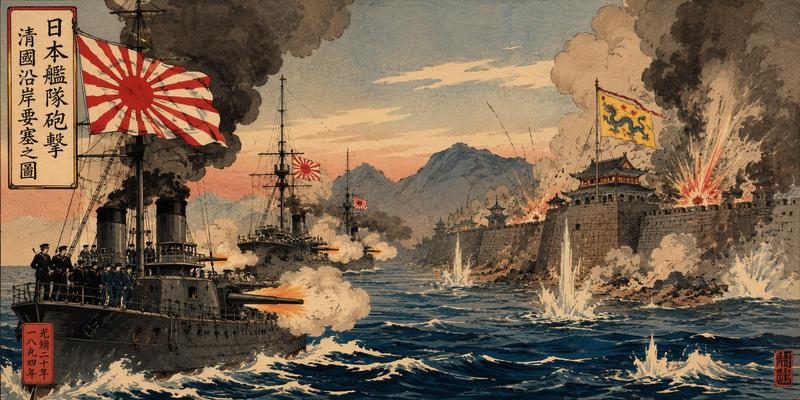
The First Sino-Japanese War (1894–1895) erupted over competing influence in Korea. Japan's modern navy annihilated the Chinese fleet at the Battle of the Yalu River, while its army routed Chinese forces in Manchuria and the Liaodong Peninsula. The war lasted less than a year but produced a revolutionary shift in Asian geopolitics. The Treaty of Shimonoseki (1895) forced China to cede Taiwan, recognize Korean independence (effectively Japanese control), and pay a large indemnity.

The First Sino-Japanese War announced Japan's arrival as a great power and accelerated China's descent into political chaos, contributing to the Boxer Rebellion and ultimately the fall of the Qing Dynasty. It is a powerful example of the Thucydides Trap in a non-Western context, demonstrating that the dynamics of rising and ruling powers operate universally. When an established power fails to modernize while a rising neighbor transforms itself, the structural imbalance becomes a near-certain pathway to war.

11

United States vs. United Kingdom

Period: 1890s – 1920s
Rising Power: United States  |  Ruling Power: United Kingdom
Peace

By the 1890s, the United States had surpassed Britain as the world's largest industrial economy. American naval power was growing rapidly, the Monroe Doctrine asserted hemispheric dominance, and American territorial ambitions — demonstrated in the Spanish-American War of 1898 — were expanding. For Britain, which had maintained global naval supremacy since Trafalgar, American rise posed a structural challenge of the first order.

Yet this is history's most celebrated case of a peaceful power transition. Rather than resist American expansion, Britain made a series of strategic accommodations. It withdrew its naval forces from the Western Hemisphere, accepted American dominance in the Caribbean and the Pacific, and settled outstanding territorial disputes (the Venezuela Crisis, the Alaska boundary) through arbitration rather than force. Britain's strategic calculus was clear: with rising threats from Germany in Europe, it could not afford a simultaneous confrontation with the United States. Accommodation in the West allowed concentration against the more immediate danger in the East.

The result was the "Special Relationship" — a diplomatic, military, and cultural partnership that proved decisive in both World Wars and endured throughout the 20th century. Britain traded short-term primacy for long-term security and alliance. The case offers the clearest historical template for how a ruling power can navigate displacement without catastrophe: by identifying shared interests, accepting the inevitability of relative decline, and deliberately cultivating a partnership with the rising power. It remains the single most studied precedent for those seeking to apply the Thucydides Trap framework to US-China relations today.

12

Germany vs. Britain

Period: 1900 – 1914
Rising Power: Germany  |  Ruling Power: Britain
War

The rivalry between Wilhelmine Germany and Edwardian Britain is Graham Allison's central cautionary tale — the case that most closely parallels contemporary US-China dynamics. By 1900, Germany had surpassed Britain in steel production, chemical manufacturing, and scientific research. Kaiser Wilhelm II launched an aggressive naval building program (the Tirpitz Plan) that directly challenged Britain's longstanding naval supremacy. Germany demanded colonial possessions and a "place in the sun" commensurate with its economic might.

Britain responded with the construction of the revolutionary Dreadnought-class battleships and the formation of the Entente Cordiale with France and later Russia. An escalating arms race, rigid alliance systems, and mutual suspicion created a powder keg. When Archduke Franz Ferdinand was assassinated in Sarajevo in June 1914, the structural pressures that had been building for decades detonated. Within weeks, every major European power was at war.

World War I (1914–1918) killed approximately 20 million people and destroyed four empires (German, Austro-Hungarian, Ottoman, and Russian). It is the Thucydides Trap's most devastating modern example. What makes it especially instructive is that neither side wanted or expected a war of such magnitude. Leaders on both sides believed the conflict would be short and decisive. The lesson is chilling: structural forces can produce wars that exceed the imagination of those who start them. Deep trade ties, cultural affinity, and even royal family connections between Germany and Britain were insufficient to override the structural logic of fear, arms competition, and alliance entanglement.

13

Japan vs. the United States

Period: 1930s – 1940s
Rising Power: Japan  |  Ruling Power: United States
War

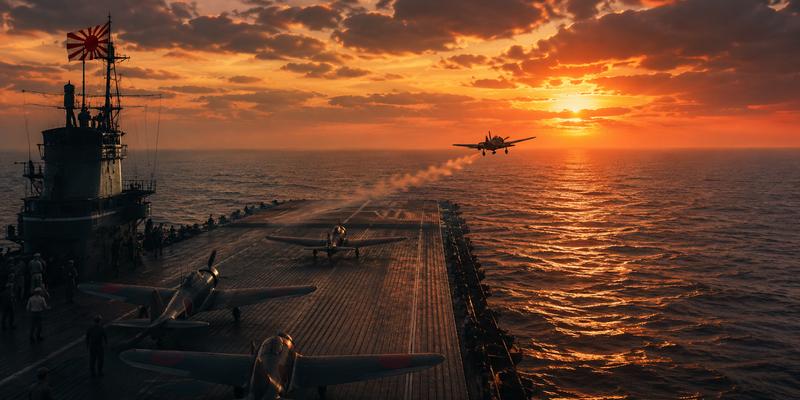
Japan's rapid military and industrial expansion in the 1930s, driven by imperial ambitions and a resource-hungry economy, put it on a direct collision course with the United States. Japan's invasion of Manchuria (1931), its full-scale war against China (1937), and its expansion into French Indochina (1940) represented a systematic bid for dominance over East Asia and the Western Pacific — regions where the United States had vital strategic and economic interests.

The United States responded with escalating economic pressure: asset freezes, export controls, and ultimately a total oil embargo in July 1941 that threatened to cripple Japan's military within months. Faced with a choice between abandoning its imperial project or striking before its reserves ran dry, Japan chose war. The attack on Pearl Harbor on December 7, 1941 brought the United States into World War II.

The Pacific War (1941–1945) was fought across an ocean spanning thousands of miles, from Midway and Guadalcanal to Iwo Jima and Okinawa. It ended with the atomic bombings of Hiroshima and Nagasaki — the only use of nuclear weapons in combat. Japan's unconditional surrender restructured the entire Asian political order. This case reveals a critical variant of the Thucydides Trap: when economic sanctions are used as an instrument of containment, they can paradoxically accelerate the very war they are designed to prevent. A rising power facing economic strangulation may calculate that striking first is preferable to slow suffocation.

14

Germany vs. Britain, France, and the USSR

Period: 1933 – 1945
Rising Power: Germany  |  Ruling Power: Britain, France, USSR
War

Nazi Germany's resurgence under Adolf Hitler represents the Thucydides Trap at its most extreme. Germany rearmed at breathtaking speed, remilitarized the Rhineland, annexed Austria and the Sudetenland, and openly repudiated the Versailles Treaty. Hitler's ambitions were not limited to restoring Germany's pre-1914 position but aimed at continental hegemony and racial empire. Britain and France, the established European powers, initially attempted to manage Germany's rise through appeasement — a strategy that proved catastrophically inadequate.

The failure of appeasement at Munich (1938) demonstrated a critical lesson about the Thucydides Trap: accommodation only works when both sides have limited, negotiable objectives. When the rising power's ambitions are unlimited or ideologically driven, concessions are interpreted as weakness and only embolden further demands. Germany's invasion of Poland in September 1939 triggered World War II, the most destructive conflict in human history.

The war killed an estimated 70–85 million people, destroyed entire nations, and produced the Holocaust. It ended with Germany's unconditional surrender, the division of Europe, and the emergence of the United States and the Soviet Union as the world's two superpowers. This case is the ultimate warning embedded in the Thucydides Trap framework: when the structural dynamics of rising power are combined with totalitarian ideology and leadership pathology, the result can be destruction on a civilizational scale. It also demonstrates that the ruling powers' failure to respond early and decisively to a rising threat can make the eventual conflict far worse than an earlier confrontation would have been.

15

The Soviet Union vs. the United States

Period: 1945 – 1991
Rising Power: Soviet Union  |  Ruling Power: United States
Peace

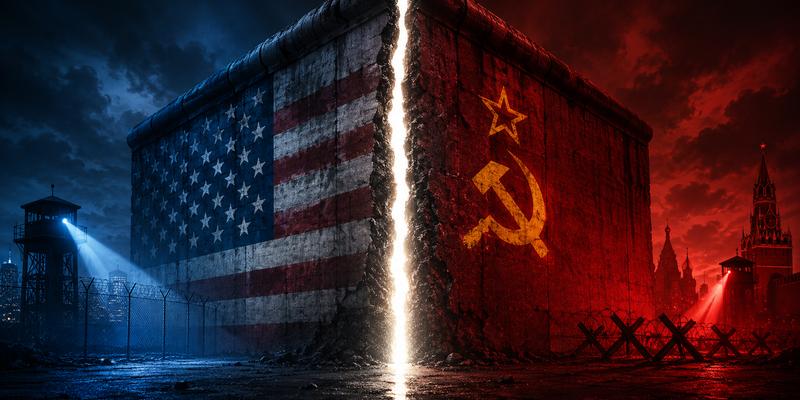
The Cold War is the most paradoxical case in the Thucydides Trap framework. By every structural measure, it should have produced a direct, catastrophic war: two ideologically opposed superpowers, competing for global influence, engaged in a massive arms race that included tens of thousands of nuclear warheads, fighting proxy wars on every continent, and confronting each other repeatedly in high-stakes crises — Berlin, Cuba, Korea, Vietnam. The structural pressures were more intense than in almost any previous case.

Yet direct great-power war never came. The primary reason was nuclear deterrence. The development of thermonuclear weapons and intercontinental delivery systems created a condition of Mutually Assured Destruction (MAD) — a strategic reality in which any direct war between the superpowers would result in the annihilation of both. This unprecedented cost of conflict fundamentally altered the decision calculus in a way no previous Thucydides Trap case had experienced. Leaders on both sides, particularly during the Cuban Missile Crisis of 1962, came to the brink and stepped back precisely because the consequences of crossing the threshold were too catastrophic to contemplate.

The Cold War ended not with a bang but with the peaceful dissolution of the Soviet Union in 1991 — an internal collapse driven by economic stagnation, political rigidity, and imperial overstretch. The case demonstrates that the Thucydides Trap can be escaped when the cost of war is raised to an existential level. However, it also reveals the terrifying fragility of nuclear deterrence: on multiple occasions, technical errors and miscommunication brought the world within minutes of nuclear war. Peace was maintained, but not always by design — sometimes by sheer luck.

16

China vs. the United States

Period: 2000s – present
Rising Power: China  |  Ruling Power: United States
Peace (Ongoing)

The defining geopolitical question of the 21st century is whether the United States and China can manage history's most consequential power transition without war. China's rise has been staggering in its speed and scale: in 1980, its GDP was roughly one-tenth of America's. By the 2010s, it had become the world's largest economy by purchasing power parity, the largest trading nation, and the second-largest military spender. No country in history has risen so far, so fast, across so many dimensions of national power.

The structural conditions for a Thucydidean confrontation are present across virtually every domain. The Taiwan Strait remains the single highest-risk flashpoint — China views reunification as a core national interest, while the United States is committed to Taiwan's defense. Competition over semiconductors, artificial intelligence, and emerging technologies has created a "tech cold war." Military modernization, South China Sea disputes, and competing visions for the international order add further friction. Both sides are locked in an escalating spiral of tariffs, sanctions, and strategic decoupling.

Several factors distinguish this case from historical precedents. Both powers possess nuclear arsenals, raising the cost of direct war to an existential level. Their economies remain deeply interdependent, despite accelerating decoupling. International institutions, imperfect as they are, provide frameworks for managing disputes. The open question — the question that will define the century — is whether these moderating factors are sufficient to overcome the structural logic that has produced war in 75% of historical cases. As Allison himself has argued, escaping the Thucydides Trap requires "Herculean efforts" from leaders on both sides — a willingness to subordinate short-term domestic politics to long-term strategic stability.